How Dwarka Expressway Is Strengthening New Gurgaon's Residential Growth
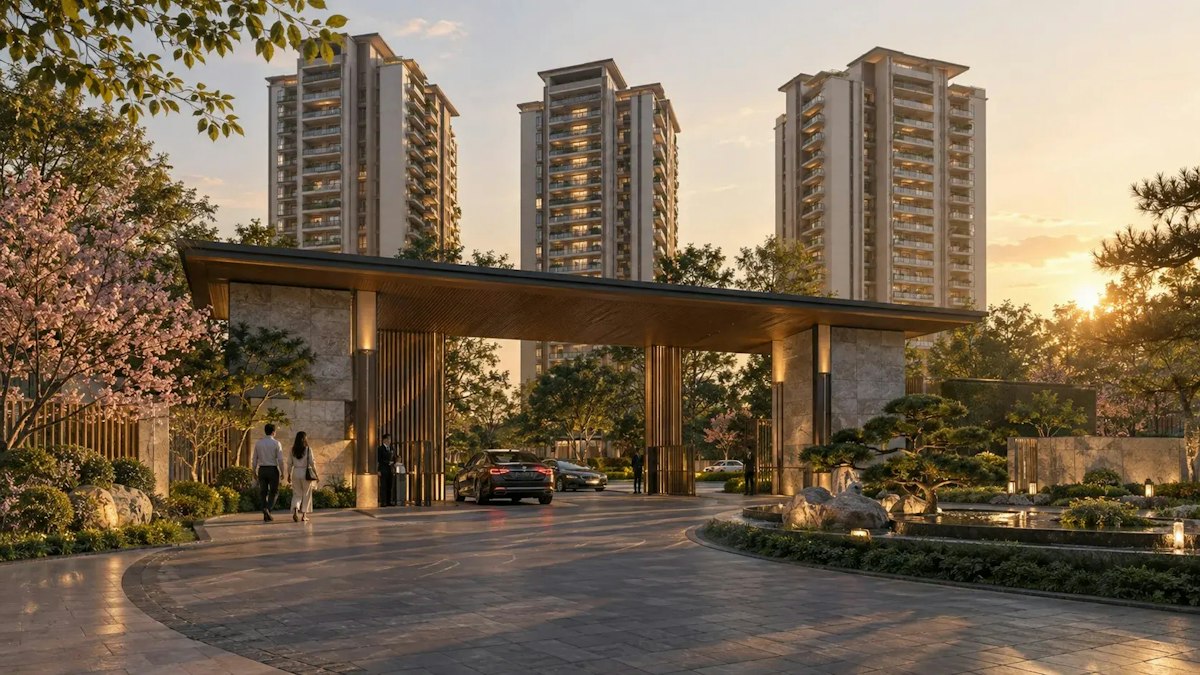
A major road corridor can change more than the way people travel. Over time, better connectivity can influence where businesses locate, where people choose to live and how new neighbourhoods develop. In Gurugram, the Dwarka Expressway has become an important part of that transformation, particularly for the newer residential areas that are emerging around the city's western and northern growth corridors. For buyers exploring this changing market, developments such as Pardos Sakura in Sector 90 offer an example of how residential projects are becoming part of a much larger urban expansion story.
The significance of the Dwarka Expressway is therefore not limited to the expressway itself. Its wider influence can be seen in new residential sectors, commercial development, supporting roads and increasing demand for better connections between Delhi, Gurugram and Manesar.
From Road Corridor to Growth Corridor
Infrastructure and real estate tend to develop together.
When a major road becomes more accessible, travel between different parts of a city can become easier. Businesses gain access to a larger workforce, residents get more commuting options and developers find new locations where housing can be built at scale.
This is broadly what has happened around the Dwarka Expressway.
The corridor has encouraged residential development across a large stretch of Gurugram, while neighbouring areas such as New Gurgaon have also benefited from the growing connectivity network.
However, it would be simplistic to say that the expressway alone is responsible for the region's growth. Gurugram's expansion is being driven by several factors simultaneously, including employment centres, NH-48, Manesar, the Southern Peripheral Road, new sector roads and expanding social infrastructure.
The expressway is one important part of this larger network.
Why Connectivity Matters to New Gurgaon
New Gurgaon is spread across a large area, which makes internal and external connectivity particularly important.
A resident may live in one sector, work in Manesar, have family in central Gurugram and need to travel to Delhi regularly. A location that provides access to several major routes can therefore offer a practical advantage.
The Dwarka Expressway strengthens the western side of this connectivity network, while NH-48 continues to provide an important north-south connection through the region.
Pataudi Road and the multi-utility corridors add further alternatives for residents travelling towards Manesar and other parts of Gurugram.
This network effect is especially relevant to sectors that are no longer isolated developments but are becoming part of a much larger residential cluster.
Sector 90 Sits Within This Wider Transformation
Sector 90 is a useful example of how New Gurgaon is evolving.
The sector is surrounded by residential development and has connections towards Pataudi Road, NH-48 and the wider Dwarka Expressway region. Nearby sectors such as 86, 89 and 91 are also contributing to the creation of a larger residential ecosystem.
For someone evaluating Sector 90, it is therefore important to look beyond the boundaries of the sector itself.
A locality becomes more useful when the surrounding areas also develop.
More residents create demand for grocery stores, restaurants, schools, healthcare, fitness centres and other services. As commercial activity follows residential growth, the neighbourhood gradually becomes less dependent on established parts of the city.
This process takes time, but it is already visible across parts of New Gurgaon.
Infrastructure Is Continuing to Expand
The next phase of growth is not simply about the Dwarka Expressway.
Authorities are continuing to work on supporting infrastructure around New Gurgaon and the expressway corridor.
A recent example is the proposed flyover at Shaheed Rao Ranjit Singh Chowk, located around the intersection of sectors 86-90 and 87-91. GMDA has said the project is intended to improve movement between the Dwarka Expressway, NH-48 and Manesar. A separate grade separator is also planned at Dadi Sati Chowk, which connects sectors including 85, 86, 89 and 90.
These projects are important because an expressway cannot solve local congestion by itself.
High-speed corridors need efficient junctions, service roads and internal sector connections to work effectively for residents.
That is why the development of supporting infrastructure can be just as important as the construction of the main expressway.
The Connection With Manesar
One of the less discussed aspects of New Gurgaon's growth is its relationship with Manesar.
IMT Manesar is a major employment and industrial destination, and the residential sectors around New Gurgaon provide housing options for people working in this broader employment region.
The multi-utility corridor and other road connections are consequently important to both residential and employment mobility.
Recent infrastructure planning has specifically focused on improving movement between the Dwarka Expressway and Manesar. This includes the proposed grade separator at Shaheed Rao Ranjit Singh Chowk, where authorities expect through traffic to benefit from improved junction movement.
For residential buyers, this matters because connectivity to employment centres can influence where people ultimately choose to live.
A neighbourhood does not necessarily need to be immediately adjacent to an office district. What matters is whether the journey is reasonably manageable.
Public Transport Is Becoming Part of the Story
Road connectivity has traditionally dominated discussions about New Gurgaon, but public transport is gradually becoming more relevant.
In September 2026, Gurugram City Bus Limited introduced a bus service connecting IMT Manesar with Bajghera along the Dwarka Expressway. The initial route covers around 24 kilometres, with plans reported for a future extension towards Dwarka Sector 21 Metro station.
Developments such as these are significant because a mature urban corridor cannot depend entirely on private vehicles.
As residential occupancy increases, demand for buses, metro connectivity and other forms of public transport is likely to become more important.
This is particularly relevant for younger professionals and households that may not want to maintain multiple private vehicles.
New Gurgaon Is Becoming More Than a Housing Market
One of the clearest signs of a maturing residential corridor is the emergence of supporting infrastructure.
People do not move into a neighbourhood simply because apartments are available.
They need schools for children, hospitals for healthcare, shops for daily requirements and recreational spaces for leisure. Businesses also need customers, employees and transport connections.
New Gurgaon is gradually developing these layers.
This is why the residential story around the Dwarka Expressway should not be considered separately from the broader development of Gurugram.
The road creates accessibility, residential projects bring population, commercial establishments respond to that population and infrastructure agencies subsequently have to improve roads, drainage and public services.
It is a cycle rather than a single project.
The Expressway Is Also Changing Buyer Preferences
Improved connectivity has influenced what buyers expect from a Gurugram home.
Some buyers who previously focused on established sectors are now willing to consider newer locations if they offer modern residential communities, larger layouts and access to major roads.
This has contributed to the growth of premium and larger-format housing along the broader Dwarka Expressway corridor.
A recent market report cited by Hindustan Times estimated that average home prices along the Dwarka Expressway corridor increased substantially between 2021 and the first half of 2026, while also noting considerable unsold inventory.
The data illustrates both sides of the market.
The corridor has clearly attracted significant buyer and developer interest, but a rising market does not mean every property will perform equally well.
Buyers still need to compare projects based on location, construction quality, developer history, configuration, price and actual demand.
What Makes a Location Truly Connected?
There is an important distinction between being near an expressway and being well connected.
A residential project may be geographically close to a major road but still have poor access because of missing service roads, congested junctions or limited local connectivity.
This is why supporting infrastructure matters.
Recent discussions around new sectors along the Upper Dwarka Expressway have highlighted the importance of service roads and safe local access as residential occupancy increases.
For homebuyers, this means a location should be evaluated from the ground rather than simply through a map.
A useful site visit should include the approach road, nearest junction, peak-hour traffic, public transport availability and alternative routes.
What the Next Phase Could Look Like
The next phase of New Gurgaon's development is likely to be less about simply adding more housing and more about improving the systems that support existing and future residents.
Road upgrades, flyovers, drainage, sewer networks, public transport and commercial infrastructure will increasingly influence how individual sectors perform.
There are already examples of this shift. GMDA is working on additional infrastructure around developing sectors, including drainage and missing sewer connections in parts of the Dwarka Expressway region.
This is a normal stage in the development of a rapidly expanding urban corridor.
Housing can arrive faster than civic infrastructure, creating pressure on authorities to catch up. Over time, successful neighbourhoods are generally those where these different systems become better integrated.
Why This Matters for Residential Development
For buyers considering a new home, infrastructure provides the larger context for evaluating a residential project.
A modern apartment may provide the immediate living experience, but its long-term convenience depends partly on what happens around it.
This is where a Pardos New Launch in the Sector 90 area can be viewed within the broader New Gurgaon story rather than as an isolated residential offering.
The question for a buyer should not simply be, "What amenities does the project have?"
It should also be, "What is happening around the project?"
Are roads improving? Is the surrounding population increasing? Are schools and healthcare becoming more accessible? Are employment hubs reasonably connected? Is commercial activity expanding?
These questions provide a more complete picture of a property's location.
Looking Beyond the Expressway
The real impact of the Dwarka Expressway may ultimately be measured by what develops around it.
An expressway is infrastructure, but the communities that grow around it are what give that infrastructure long-term relevance.
New Gurgaon is increasingly becoming one of those communities.
Its residential sectors are expanding, employment destinations such as Manesar remain important, and the road network connecting different parts of Gurugram is continuing to evolve. Sector 90 sits within this wider transformation, benefiting from its relationship with several important roads and the growing residential ecosystem around it.
For homebuyers, the appeal is not simply faster travel.
It is the possibility of living in a newer urban environment where connectivity, housing, employment and social infrastructure are developing together.
That is what makes the Dwarka Expressway important to New Gurgaon's residential future. Its role extends beyond being a road between two points—it is becoming one of the infrastructure backbones supporting Gurugram's next phase of urban growth.